

Resources
What Is a Thermosetting Fluoropolymer?
It’s the resin behind some of the toughest architectural coatings available. Here’s what the name means, how it differs from PVDF, and why it matters for metal on a building.
The name packs two ideas together, so it helps to take them one at a time.
What is a fluoropolymer?
A polymer is a long molecule made of repeating units. Plastics, rubber and the resins in paint are all polymers. A fluoropolymer has fluorine atoms bonded along its carbon backbone.
Carbon-fluorine bonds are exceptionally strong. They give fluoropolymers their resistance to chemicals, heat and weathering, and a low surface energy that very little sticks to. Teflon (PTFE) is the everyday example; it’s what makes a non-stick pan non-stick.
What does thermosetting mean?
Polymers fall into two families. Thermoplastics soften when heated and harden again as they cool, and they can be remelted. Thermosets react when heated: their chains cross-link into a three-dimensional network, and once cured they won’t melt or soften again. That network makes a thermoset rigid, dimensionally stable and resistant to heat.
A thermosetting fluoropolymer pairs the chemical resistance of a fluoropolymer with the cross-linked strength of a thermoset.
In a coating, that means a film that cures in the oven into a hard, tightly bound layer, with the weather and chemical resistance of the fluorine chemistry built in.
How is it different from PVDF (Kynar)?
PTFE and PVDF, the resin in Kynar 500 and Hylar 5000 coatings, are both thermoplastic fluoropolymers. A PVDF finish forms when the resin fuses into a film during the bake, without cross-linking. A thermosetting fluoropolymer cures chemically instead. With Coastal’s resin, that gives a harder surface that resists scratches during fabrication and installation, and in most colors it needs one coat where PVDF needs two. Our primer for architects compares the two in more detail.
Where it’s used in architecture
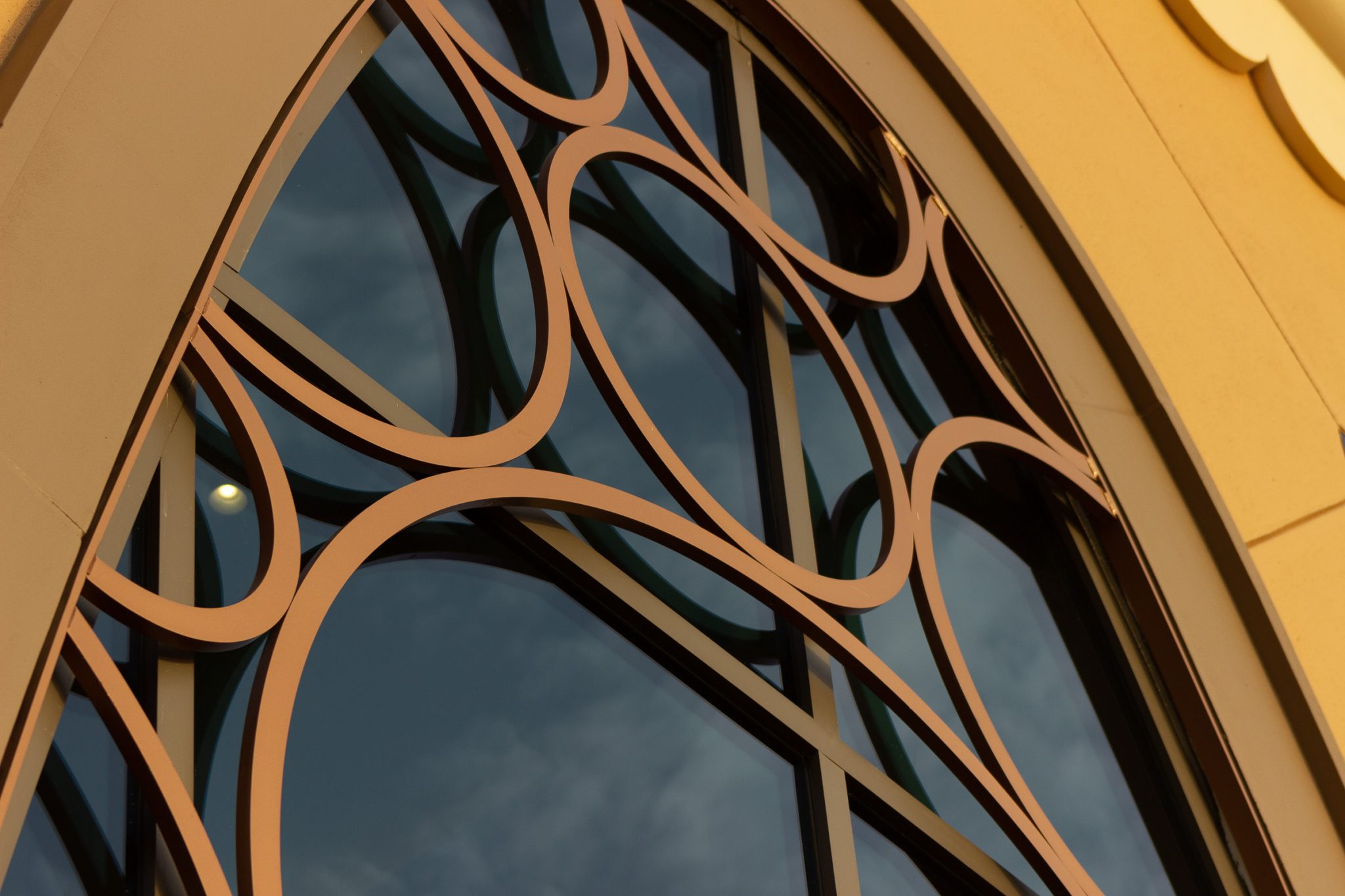
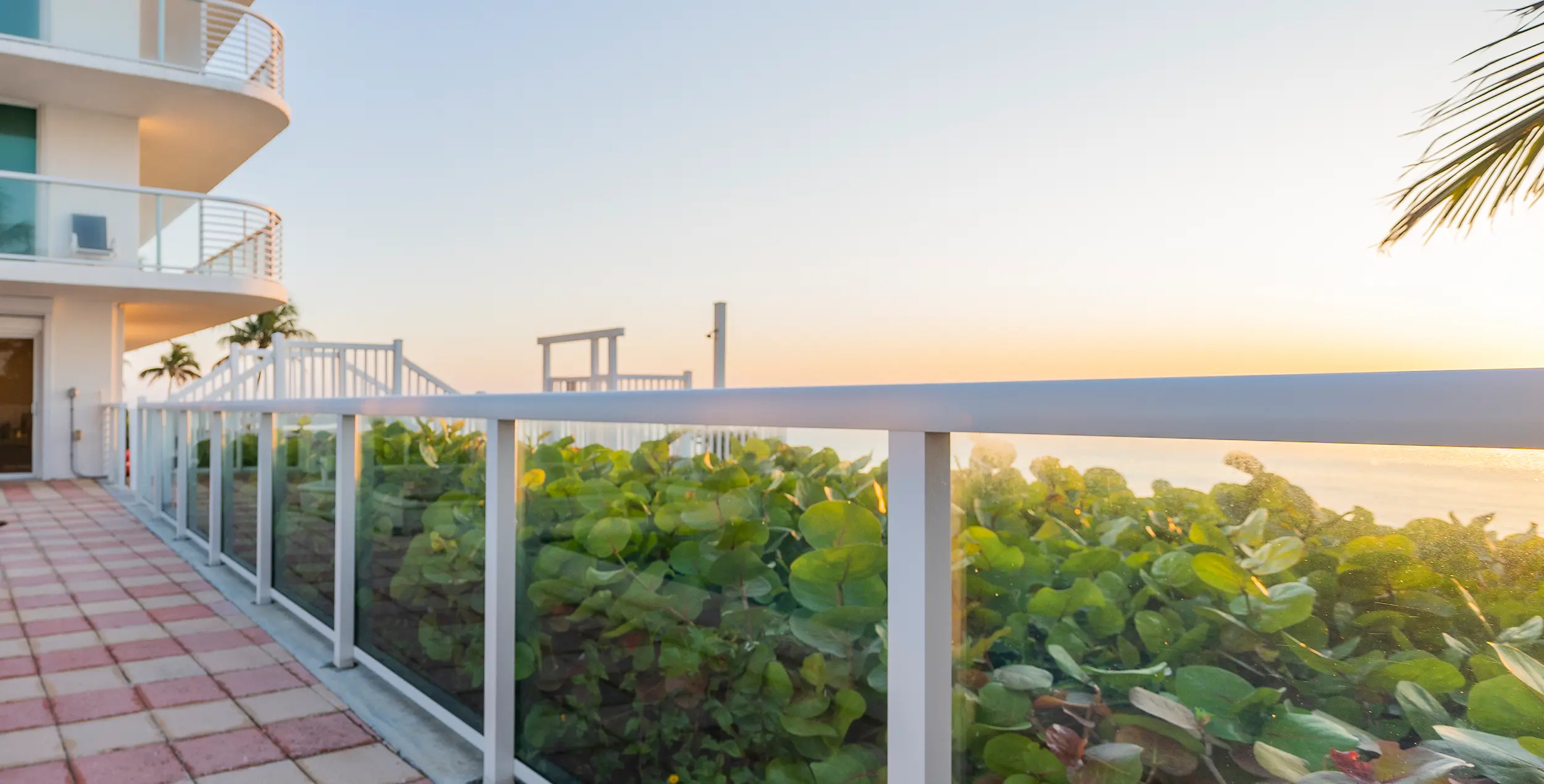
Fluoropolymer coatings go on metal panels, curtain wall, extrusions, railings, sunshades and other exterior metal, especially on buildings that are tall, highly visible or close to the water.
Why architects specify it
- Color that lasts: it resists fading and chalking under strong sun.
- Weather resistance: UV, moisture and salt air for decades.
- Pollution, stains and graffiti: it holds up in dense urban settings and cleans easily.
- Low maintenance: this matters most on high-rises, where reaching the facade is expensive.
- Long service life: fewer repaints over the life of the building.
- Low VOCs: many formulations are low-VOC and suit green building projects.
- Design freedom: a wide range of colors and finishes.
Coastal Fluoropolymer
Our fluoropolymer thermosetting resin uses a resin system that is 100% fluorocarbon, a chemistry that has been used in architecture for more than 30 years. It’s engineered to exceed AAMA 2605, the highest of the architectural coating specs. See the specs and test results, or tell us about your project.
Resources
From the shop floor
What architects and fabricators ask us most about coatings, finishes and specifications.
Our coating systems
Powder coating vs. liquid coating
How the two compare on architectural aluminum, and why pretreatment matters more than either.
Read more
Architectural metal coatings: a primer for architects
AAMA 2603, 2604 and 2605 explained, and how fluoropolymers compare with Kynar.
Read moreWhat is a thermosetting fluoropolymer?
What the name means, how it differs from PVDF, and why architects specify it.
Read more
Interested in partnering with us?
Contact our team for pricing or to schedule an onsite visit of our facility. We usually reply within a couple of hours on business days.