

Resources
Powder Coating vs. Liquid Coating for Architectural Aluminum
Both can give aluminum a finish that lasts for decades in Florida. Which one you choose matters less than how the metal is prepared before either goes on.
We get asked this all the time, usually by someone who wants the finish that will stand up best to heat, sun, salt and rain. It’s a fair question, but it skips the step that decides most coating failures.
A coating is only as good as the surface under it.
Start with pretreatment
Paint a wall without primer and you know what happens: the color looks flat, the finish goes on unevenly, and it starts failing early. Architectural coatings behave the same way. The best resin on the market won’t stay bonded to aluminum that still carries oil, oxide and shop dirt.
So before comparing powder and liquid, ask any finisher about their pretreatment:
- How do you clean the metal and remove contaminants?
- How many stages does your line run?
- What base layer does the coating actually bond to?
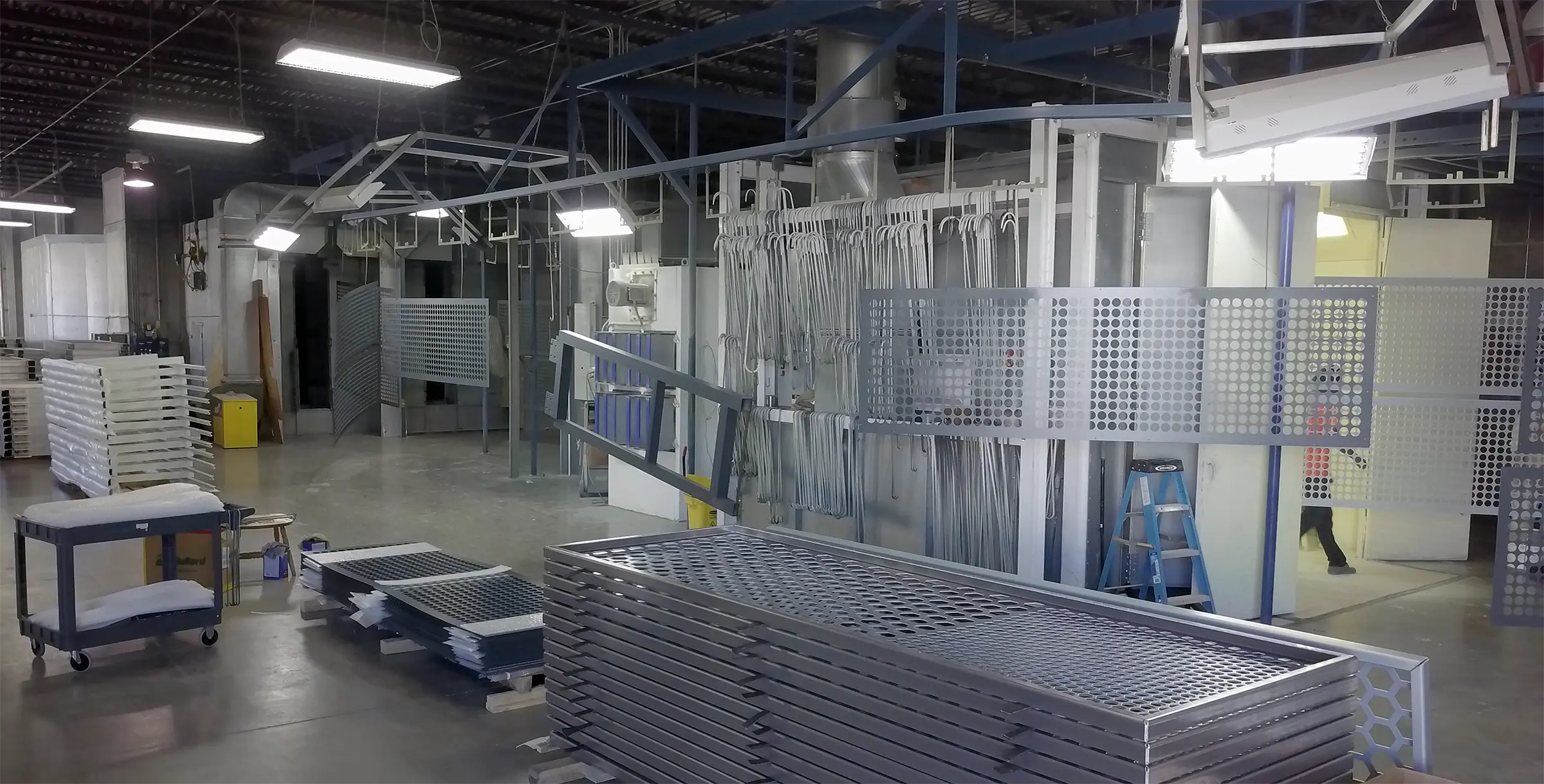
At Coastal, aluminum goes through a six-stage pretreatment that ends in a chrome phosphate conversion coating. That layer keeps the aluminum from corroding and gives the finish something to grip, whichever coating goes on top.
Is powder coating better than liquid?
Neither wins outright. Powder coating took a reputation hit in recent years from finishes that cracked and peeled, but almost every one of those failures traces back to poor pretreatment rather than the powder itself. Liquid systems have improved over the same period. On properly pretreated aluminum, both perform.
The real choice comes down to the part, the finish you want and how the building will be maintained.
How powder coating works
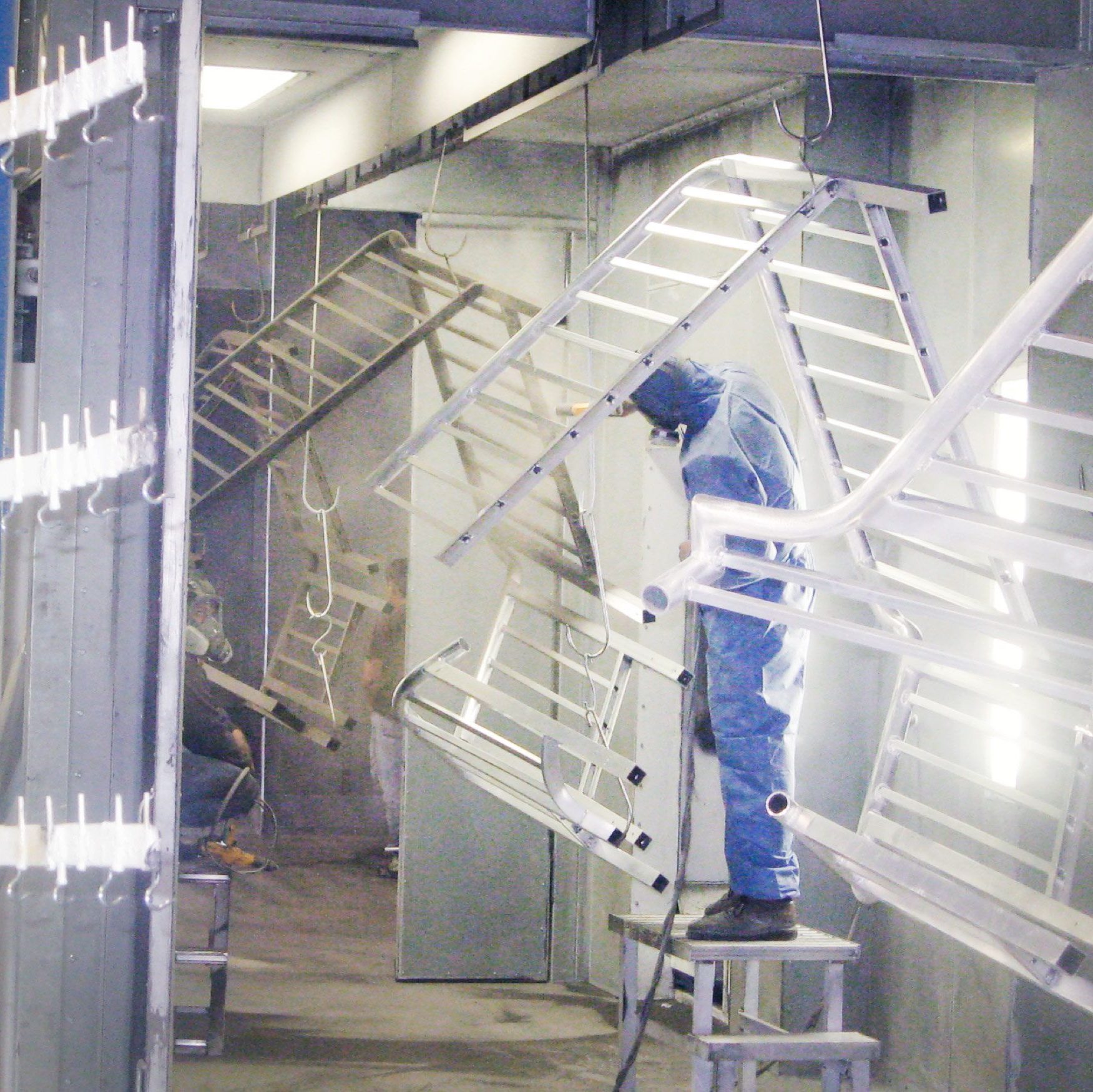
Powder coating is a dry finish. A free-flowing powder of resin, curatives, pigments and leveling agents is sprayed with an electrostatic charge so it clings to the part, then baked. In the oven the powder melts, flows out and cures into a hard, even film. No solvent is involved.
How liquid coating works
Liquid coatings are pigments and binders carried in a solvent or in water. They’re sprayed on (brushes and rollers work too, outside the shop) and then air-dried or baked. Solvent-based and water-based versions each have their own trade-offs in application and performance.
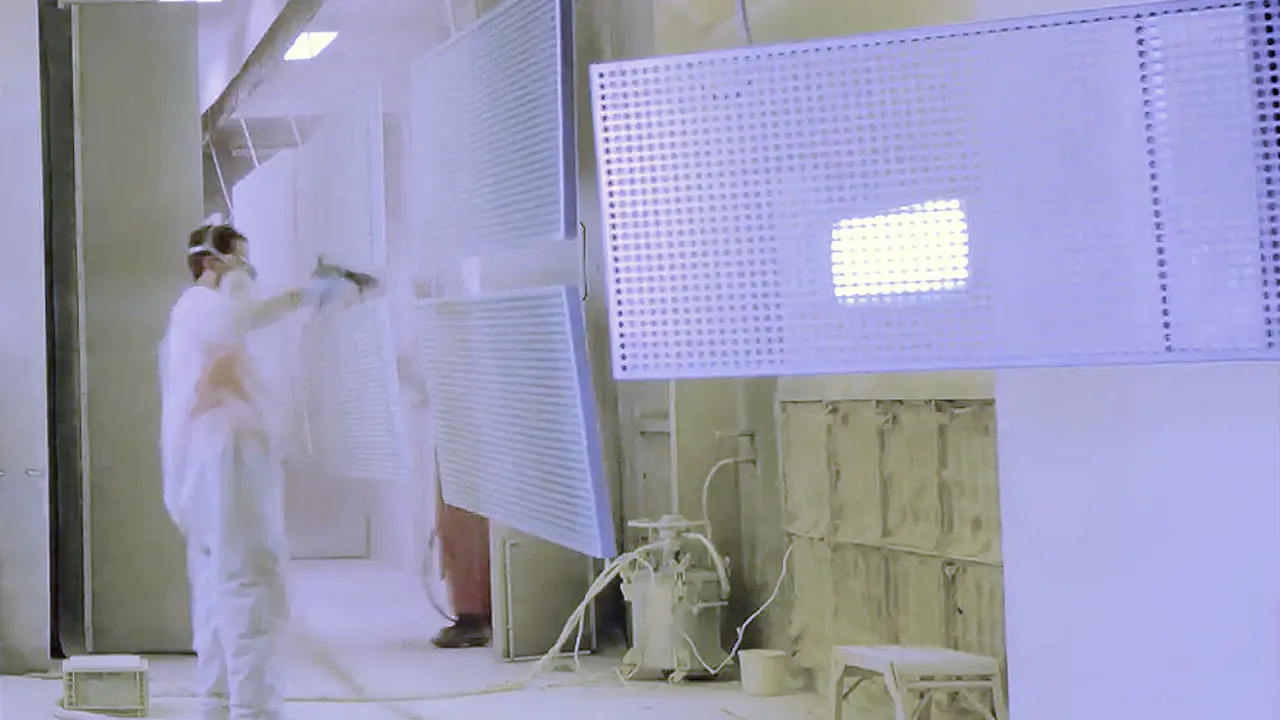
Powder vs. liquid at a glance
| Powder coating | Liquid coating | |
|---|---|---|
| Application | Dry powder, electrostatic spray | Spray, brush or roller |
| Curing | Baked at high temperature | Air-dried or baked at lower temperatures |
| VOCs | None | Solvent-based systems release VOCs; water-based options exist |
| Film | Thicker and more uniform | Can be applied in very thin layers |
| Overspray | Collected and reused, so little waste | Not recoverable |
| Shapes and substrates | Parts that can take oven heat | Intricate shapes and heat-sensitive materials |
| Field repairs | Harder to touch up | Easier to touch up and repair |
Which should you specify?
Choose powder for a hard, solvent-free finish that resists chipping, scratching and fading, on parts that can go through an oven: railings, sunshades, panels and extrusions.
Choose liquid for intricate or heat-sensitive parts, very thin films, or work you expect to touch up in the field.
Either way, ask about pretreatment first, then hold the coating to the AAMA spec your project needs. Our primer on AAMA 2604 and 2605 explains the difference, and the specs for Coastal Fluoropolymer and Coastal Super-Durable show the test results behind each.
Resources
From the shop floor
What architects and fabricators ask us most about coatings, finishes and specifications.
Our coating systems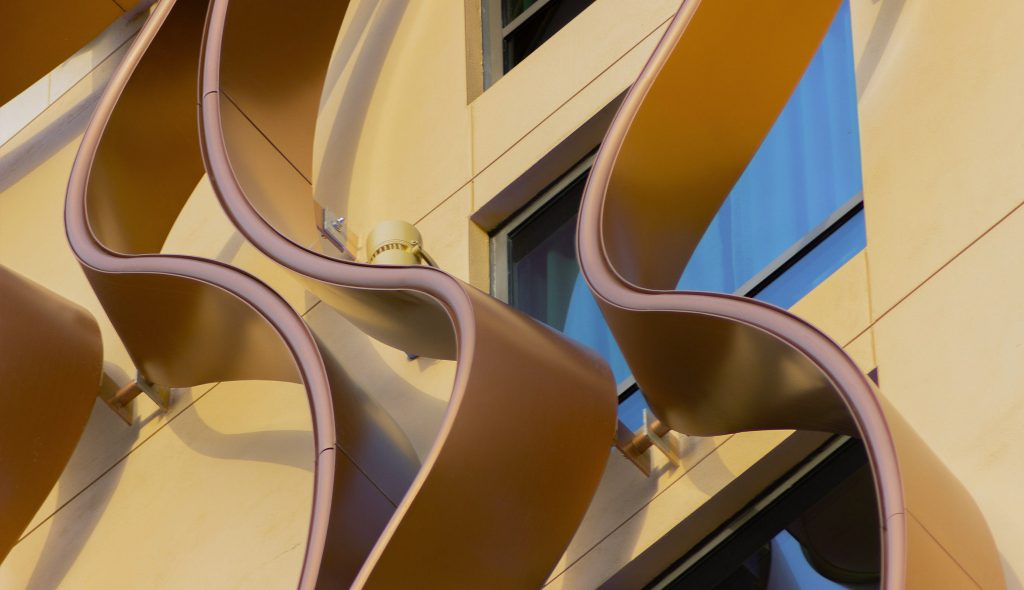
Powder coating vs. liquid coating
How the two compare on architectural aluminum, and why pretreatment matters more than either.
Read more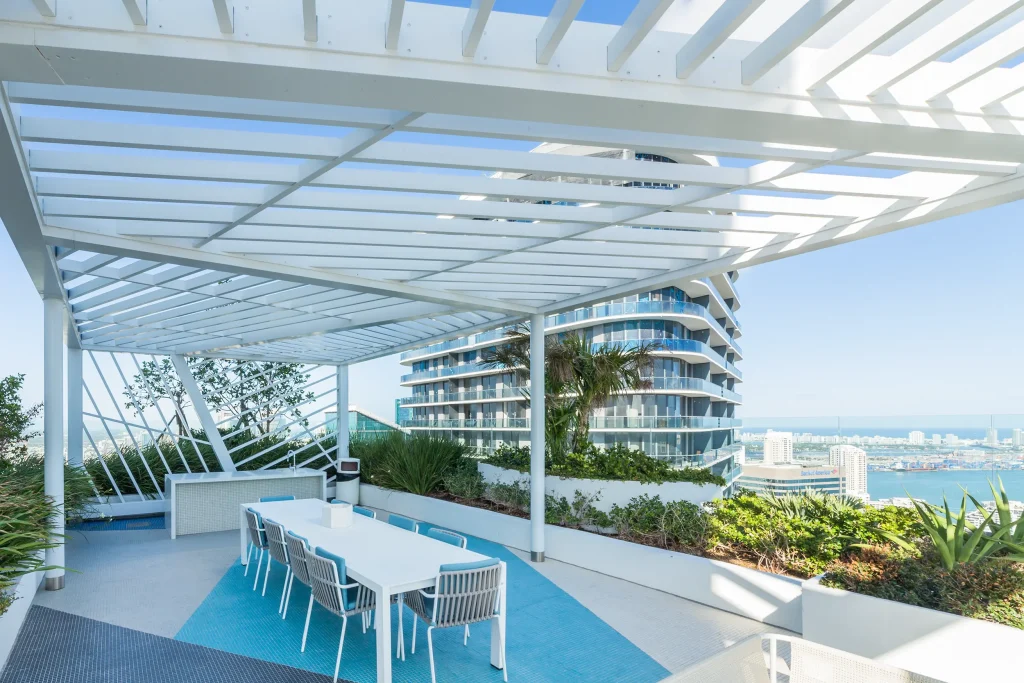
Architectural metal coatings: a primer for architects
AAMA 2603, 2604 and 2605 explained, and how fluoropolymers compare with Kynar.
Read more
What is a thermosetting fluoropolymer?
What the name means, how it differs from PVDF, and why architects specify it.
Read more
Interested in partnering with us?
Contact our team for pricing or to schedule an onsite visit of our facility. We usually reply within a couple of hours on business days.